
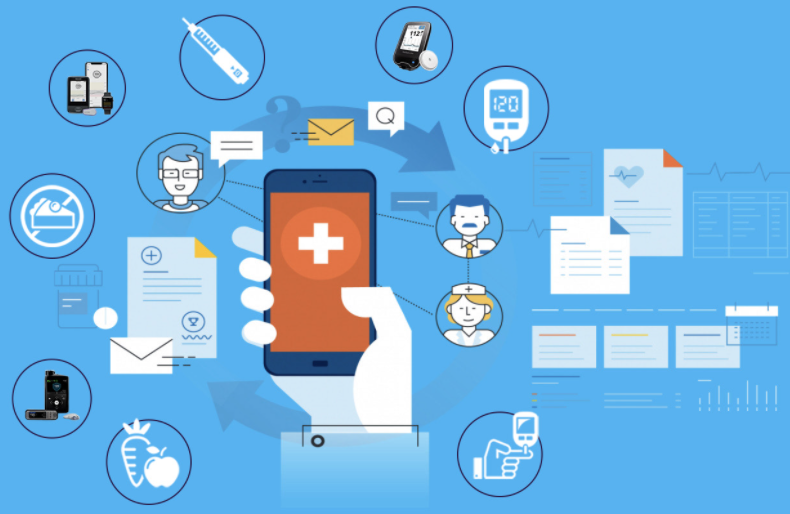
The digital marketing in the healthcare industry has come a long way in recent years, and it has been very helpful in driving new customers and helping the growth of businesses. There are a variety of ways in which the digital marketing has evolved and can help any business succeed, including mobile marketing, video marketing, social media presence, targeted paid ads and predictive models.
Social media presence
Social media is an excellent platform for healthcare providers to increase their visibility and improve their brand reputation. It is also a great way to interact with patients and other interested parties.
Using social media in healthcare can help you create better relationships with your patients and provide them with accurate information from digital marketing agency for healthcare. You can also use it to promote your services and encourage more patient referrals.
A successful social media presence requires a strong strategy. In addition, it needs to include quality content and the proper posting times. You can also enhance your online branding by integrating your social media accounts with other digital advertising strategies.
Social media has the ability to drive instantaneous results. In fact, people are searching for solutions to their health concerns online. This is a good opportunity to reach them and get them to your website.
Targeted paid ads
Targeted paid ads in digital marketing for healthcare professionals (HCPs) are crucial for brand exposure. This type of ad is most effective in the pharma industry, which accounts for a large share of total advertising spend. But to achieve success, your campaign needs to reach providers across multiple screens and devices.
Increasingly, healthcare marketers are shifting toward programmatic and native ad formats. These digital channels allow for creative and hyper-personalized messaging. However, they require precise targeting. If you’re trying to get HCPs to engage, you need to create a strategic plan that includes paid SEM and organic SEO.
One way to optimize your campaigns is to use NPIs, which are unique 10-digit identification numbers issued by the federal government to health care providers. These numbers enable you to engage your audience based on a variety of characteristics. For example, you can target HCPs with a certain specialty and track their engagement over time.
Video marketing
Video marketing has become a key component of healthcare marketing. Using videos to promote your business can increase patient satisfaction and create a positive impression of your healthcare provider. However, you need to make sure your video does its part.
To create a high-quality video, it’s best to use a professional video company. It’s also helpful to do a dry run before you get started. Having a mockup of your video ready to go can help you avoid mistakes.
The University of Pittsburgh Medical Center used a one-minute video to tell its story. This is a good length to start with for a facility or website video.
A well-produced video can be a big help when you’re trying to attract new patients. In addition to introducing your staff and explaining how you provide services, you can show potential patients the ins and outs of your facility.
Predictive models
If you’re interested in digital marketing for healthcare, you might be wondering how predictive models can benefit your organization. The answer to this question will depend on the size of your organization, the data you have, and the complexity of your technology.
Predictive modeling is a form of advanced analytics that uses machine learning to analyze data from a variety of sources. This allows your company to better allocate resources and improve patient care. You can use predictive models to determine patient risks, predict when patients will be readmitted, and even detect atypical symptoms.
Predictive models can also help your company reduce staffing shortages. They can estimate how much medical personnel you need, and alert you if a specific person has missed an appointment.
Mobile marketing
The use of mobile marketing in healthcare can help physicians, hospitals, and practices reach their target audience. However, it is important to implement strategies that are not only effective but also compliant with HIPAA and other regulatory requirements.
Effective marketing techniques in the healthcare industry include value-centered communication. This involves identifying latent needs and offering services not explicitly requested by patients.
Another strategy is to use an omnichannel approach, which includes mobile marketing and email marketing. These techniques offer real-time analytics and customized content. It allows hospitals to connect with patients more efficiently and make data-driven decisions easier.
In addition, it also helps to improve the quality of the patient experience. By communicating with patients through text messages, doctors can remind them to pick up their prescriptions or let them know about hospital department waiting times.https://www.youtube.com/embed/k8G-m_fe2To